Seoul expresses concern over potential US-North Korea diplomatic bypass
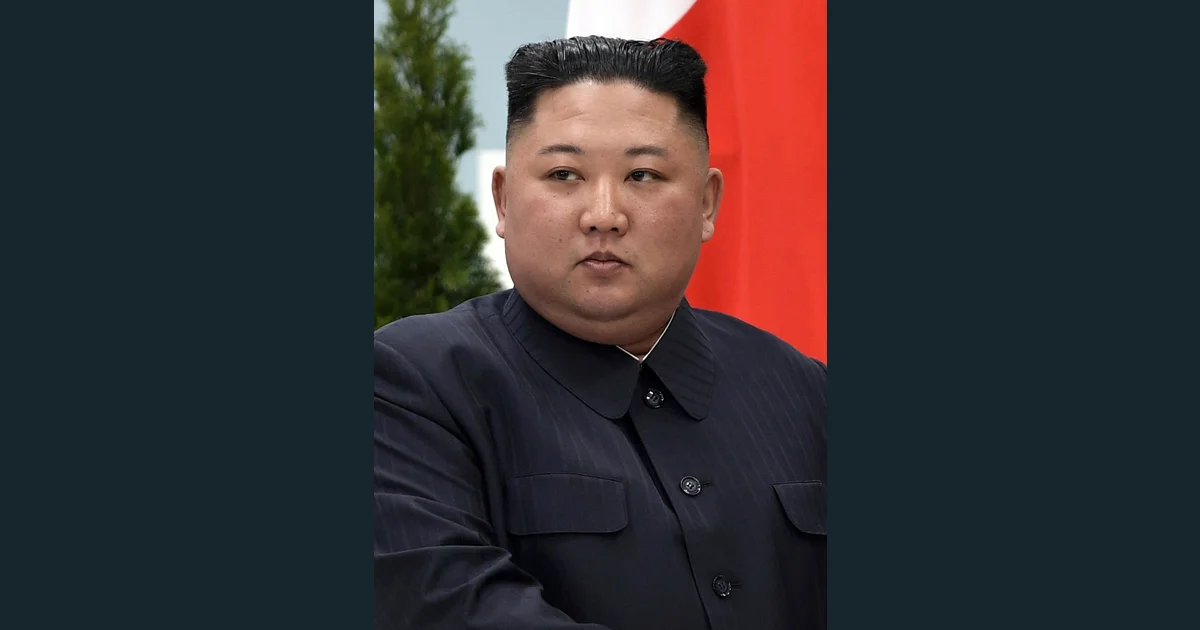
South Korean officials and analysts are expressing growing concern that the United States may seek a diplomatic breakthrough with North Korea that ignores Seoul's security needs. This apprehension follows reports of potential high-level talks between US President Donald Trump and North Korean leader Kim Jong Un, alongside a broader pattern of US foreign policy shifts. Tensions on the Korean Peninsula have escalated recently, with North Korea conducting weapons tests and border provocations, while Seoul struggles to maintain effective communication with both Pyongyang and Washington.
Key points
- South Korean officials fear the US may prioritize a deal with North Korea that leaves Seoul exposed to nuclear threats.
- North Korea recently fired approximately 10 short-range ballistic missiles toward the Sea of Japan.
- South Korea's National Intelligence Service reported that Kim Jong Un discussed a potential meeting with Donald Trump during a visit to China.
- Analysts warn that a US-North Korea agreement could potentially legitimize Pyongyang as a nuclear power.
- The South Korean government is facing challenges in maintaining its traditional security and trade relationship with the US.
What happened
South Korea is navigating a period of heightened regional tension and diplomatic uncertainty. Recent weeks have seen North Korea conduct multiple weapons tests, including the firing of approximately 10 short-range ballistic missiles toward the Sea of Japan on Thursday, according to reports. These actions coincide with North Korean military activity near the border, including the deployment of artillery and the preparation of propaganda loudspeakers.
Simultaneously, Seoul is grappling with concerns that its primary ally, the United States, may pursue a unilateral diplomatic path with North Korea. There are suggestions that a meeting between President Donald Trump and Kim Jong Un could occur on November 18 in Shenzhen, China. South Korea's National Intelligence Service informed a closed-door committee meeting that Kim Jong Un discussed the possibility of such a meeting during a visit to Dandong, China, on Saturday.
Who said what
Kim Sang-woo, a former politician and board member of the Kim Dae-jung Peace Foundation, stated that there is a significant problem of trust between the US and South Korean governments, noting that Seoul's diplomats have lost access to key decision-making personnel in the current US administration.
Lim Eun-jung, a professor at Kongju National University, warned that the most serious concern is the US potentially recognizing Pyongyang as a nuclear power, which she argued would undermine non-proliferation efforts. She added that the unpredictability of the US administration is leading some in South Korea to question the reliability of US extended deterrence guarantees.
During a visit to South Korea, German Chancellor Friedrich Merz emphasized that security in Korea and Europe is interconnected, urging an alliance of middle powers to protect free trade and oppose unilateralism.
Context
The current friction is exacerbated by broader shifts in US foreign policy, including trade restrictions and demands for increased financial contributions from South Korea for stationed US troops. Observers note that the US has previously proposed diplomatic formats involving Russia and China without including other affected parties, fueling fears in Seoul of a similar bypass regarding the Korean Peninsula.
North Korea has also been accused by Seoul of planting landmines at the border and supplying military support to Russia for the war in Ukraine, further complicating the regional security landscape.
What happens next
The potential for a meeting between President Trump and Kim Jong Un remains a focal point of regional uncertainty. As Seoul continues to struggle with its communication channels, the government faces internal pressure to re-evaluate its reliance on the US nuclear umbrella, with some voices advocating for the development of an independent nuclear deterrent.
Why it matters
South Korean officials fear that a US-North Korea diplomatic breakthrough could compromise Seoul's security and legitimize Pyongyang's nuclear program.
What we know
- North Korea fired approximately 10 short-range ballistic missiles towards the Sea of Japan on Thursday (8281f064-834d-42fb-b37e-696126a64ca8).
- South Korea's National Intelligence Service reported that Kim Jong Un discussed a potential meeting with Donald Trump during a meeting with Chinese officials in Dandong (8281f064-834d-42fb-b37e-696126a64ca8).
- German Chancellor Friedrich Merz visited South Korea to discuss security and trade (8281f064-834d-42fb-b37e-696126a64ca8).
What remains unclear
- South Korean officials fear the United States may pursue a diplomatic breakthrough with North Korea that ignores South Korean security interests (8281f064-834d-42fb-b37e-696126a64ca8).
- Donald Trump is seeking a meeting with Kim Jong Un to secure a Nobel Peace Prize (8281f064-834d-42fb-b37e-696126a64ca8).