MIT researchers develop self-organizing artificial neural network
Researchers at MIT have published a study in the journal PNAS demonstrating that artificial neural networks can be designed to build their own learning machinery through self-organization. By implementing simple rules for how connections between units should adjust, the team created a network that organizes itself without developer intervention. This model, which performs at a level comparable to traditional networks using back-propagation, aims to provide a more biologically plausible framework for understanding how the brain learns and organizes its own circuits.
Key points
- MIT scientists developed a self-organizing artificial neural network that builds its own learning machinery.
- The network uses simple rules to adjust connections, allowing it to reorganize itself without external design.
- The model performed at a level similar to traditional networks that rely on the back-propagation algorithm.
- Researchers suggest self-organization is a critical step toward achieving biological plausibility in AI models.
- The findings may eventually aid in developing brain-computer interfaces and improving machine learning systems.
What changed
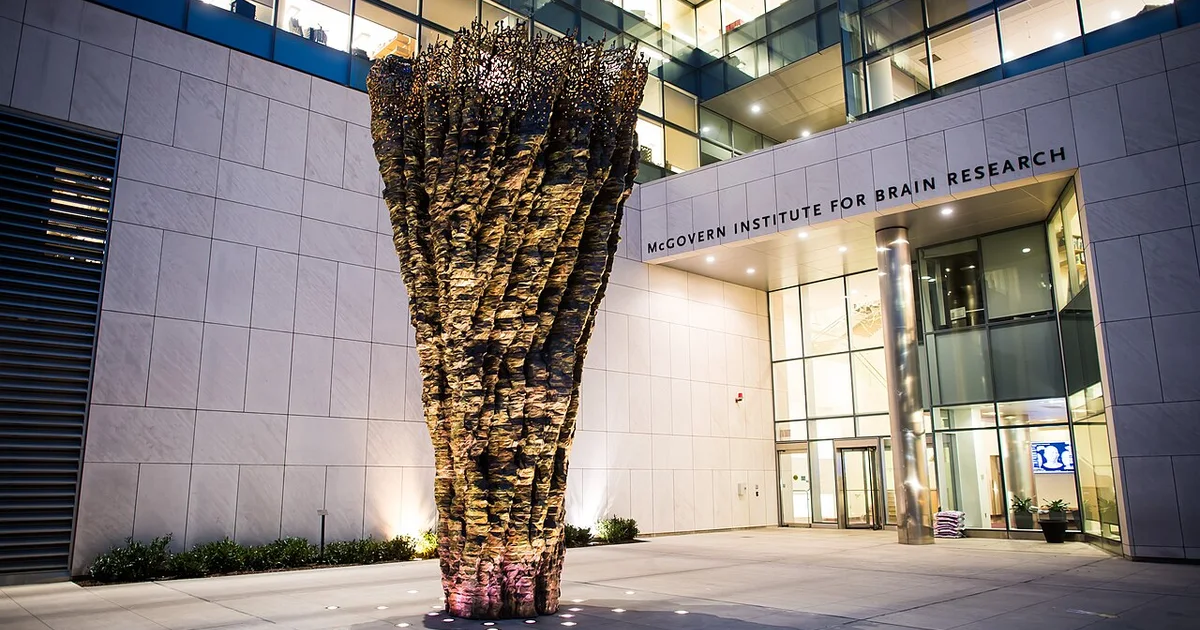
A research team at MIT's McGovern Institute for Brain Research and the K. Lisa Yang Integrative Computational Neuroscience Center has developed a computational network capable of self-organization. Unlike standard AI systems that rely on back-propagation, this network uses simple, localized rules to adjust connections between neuron-like units.
The team demonstrated that these rules allow the network to form self-assembling motifs, which serve as building blocks for functional circuits. As the network processes data, these motifs reorganize themselves using an optimization strategy similar to gradient descent, enabling the system to learn to recognize patterns and classify images.
Implications for neuroscience and AI
The study addresses a fundamental gap between artificial and biological learning. While modern AI often uses back-propagation, neuroscientists generally consider this method unlikely to be used by the human brain, which lacks an external architect.
Researchers suggest that if the proposed synaptic motifs mirror those used by the brain, it could establish a stronger connection between machine and biological learning mechanisms. This understanding is considered vital for future applications, such as the development of advanced brain-computer interfaces for patients with language loss or paralysis.
Why it matters
This research provides a new framework for biological plausibility in AI, potentially bridging the gap between how machines and brains learn.
What we know
- Scientists at MIT published a paper in PNAS demonstrating that an artificial neural network can build its own learning machinery using simple rules for self-organization.
- The self-organizing network developed by the team performed at a similar level to networks using the back-propagation algorithm for learning.
What remains unclear
- It remains uncertain whether the synaptic motifs proposed by the researchers are actually used by the human brain.
- The extent to which self-organizing networks will ultimately improve machine learning performance compared to existing architectures is not yet established.