Researchers Identify New Species of Egg-Eating Snake in Ethiopian Highlands
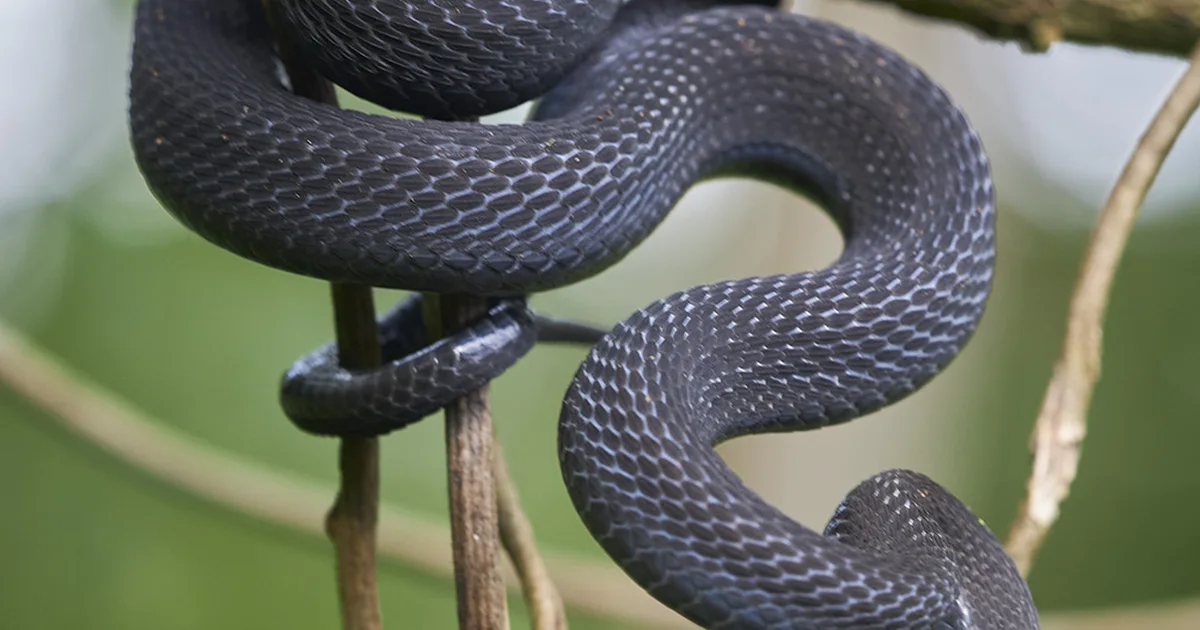
A new species of nonvenomous egg-eating snake, Dasypeltis albigularis, has been documented in the forested mountains of southern Ethiopia. Researchers led by Arthur Tiutenko of the University of Erlangen-Nuremberg identified the snake, which is characterized by an ink-black body and a distinct white throat and belly. The species feeds exclusively on bird eggs, using specialized throat vertebrae to crack them. The discovery process involved genetic analysis and captive-breeding trials to distinguish the snake from the similar African egg-eating snake. Researchers designated a holotype specimen after obtaining a deceased individual, avoiding the need to euthanize a live animal for scientific description.
Key points
- The new species, Dasypeltis albigularis, is nonvenomous and feeds entirely on bird eggs.
- It is distinguished by its ink-black body, bluish skin between scales, and white throat and belly.
- Researchers first encountered the population in 2019 in the Harenna Forest.
- The species is likely endemic to the southern slope of the Somalian Plateau.
- Human persecution is identified as a primary threat to the snake's survival.
What happened
A previously undocumented species of egg-eating snake has been discovered in the mountains of southern Ethiopia. Named the white-throated egg-eater (Dasypeltis albigularis), the snake was identified by a research team led by Arthur Tiutenko from Germany's University of Erlangen-Nuremberg.
The snake is nonvenomous and consumes only bird eggs, which it cracks using specialized vertebrae in its throat. The team initially encountered the population in 2019 within the Harenna Forest in the Bale Mountains.
Context
The identification process involved comparing the new snake to the African egg-eating snake (Dasypeltis atra). Genetic analysis and captive-breeding trials confirmed the distinct nature of the new species. To formally describe the species, researchers required a physical specimen, known as a holotype.
Tiutenko opted to wait for a naturally deceased specimen rather than euthanizing a live snake, citing ethical concerns. The species is believed to be endemic to the southern slope of the Somalian Plateau, inhabiting forests, agricultural clearings, and village settlements. It remains unconfirmed whether the species exists within Bale Mountains National Park.
What's next
Researchers continue to study the distribution of the white-throated egg-eater. A significant challenge for the species is human persecution, as local populations often kill snakes out of fear or disgust, despite the fact that no dangerous snake species are known to inhabit the area.
Why it matters
The discovery of Dasypeltis albigularis highlights the ongoing potential for identifying new species in remote, under-researched regions and underscores the importance of ethical considerations in taxonomic research.
What we know
- Researchers have documented a new species of egg-eating snake, Dasypeltis albigularis, in the mountains of southern Ethiopia.
- The white-throated egg-eater is likely endemic to the southern slope of the Somalian Plateau.
- The species is nonvenomous and feeds on bird eggs.
- The research team was led by Arthur Tiutenko of the University of Erlangen-Nuremberg.