Researchers Confirm New Critically Endangered Giant Water Lily Species in Colombia After Instagram Sighting
Researchers have confirmed a new species of giant water lily, named Victoria colombiana, in Colombia's Inírida River. The discovery began after botanical horticulturist Carlos Magdalena spotted photos on Instagram posted by Jeremiah Harris. Following satellite imagery confirmation and a five-day expedition alongside local Indigenous researchers, the team located flowering plants and identified the new species. The researchers estimate there are only about 30 to 50 wild plants remaining, making it critically endangered.
NewsRadar AI DeskPublished Oct 12, 2026, 12:05 AM UTCUpdated Oct 12, 2026, 12:05 AM UTC · 0 updates
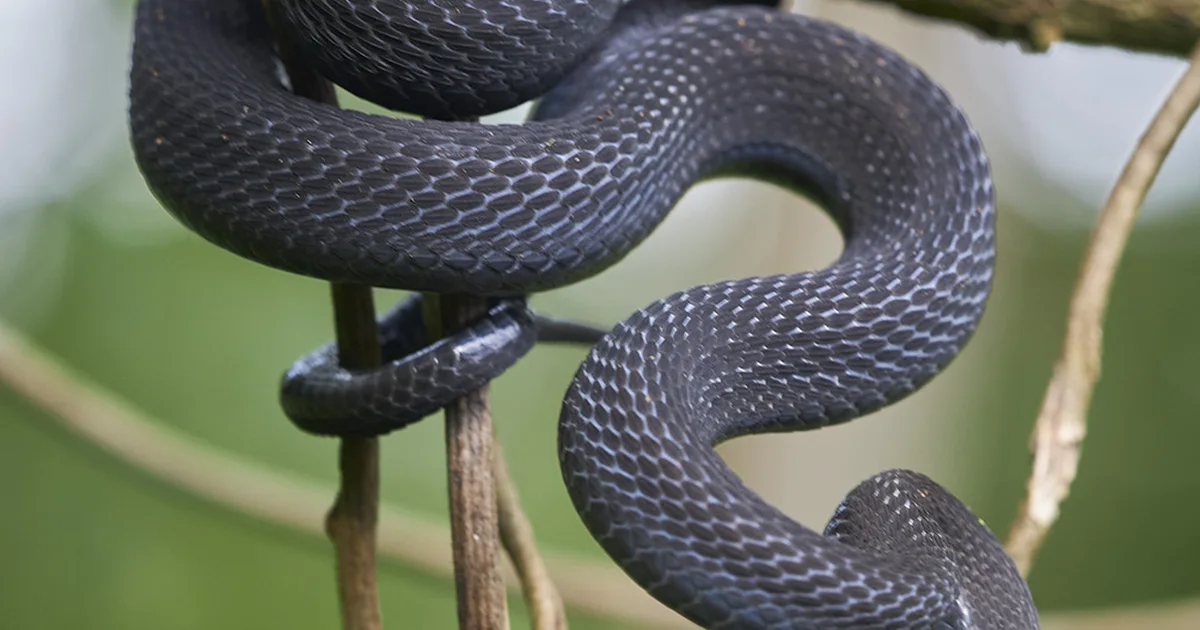
A new species of nonvenomous egg-eating snake, Dasypeltis albigularis, has been documented in the forested mountains of southern Ethiopia. Researchers led by Arthur Tiutenko of the University of Erlangen-Nuremberg identified the snake, which is characterized by an ink-black body and a distinct white throat and belly. The species feeds exclusively on bird eggs, using specialized throat vertebrae to crack them. The discovery process involved genetic analysis and captive-breeding trials to distinguish the snake from the similar African egg-eating snake. Researchers designated a holotype specimen after obtaining a deceased individual, avoiding the need to euthanize a live animal for scientific description.
· 1 source 3 min read 0 views
Original NewsRadar editorial graphic. This image does not depict the reported event.
THE ESSENTIALS
Key points
A new giant water lily species, Victoria colombiana, has been confirmed in Colombia's Inírida River.
The discovery started when Royal Botanic Gardens, Kew horticulturist Carlos Magdalena spotted photos on Instagram by Jeremiah Harris.
Researchers completed a five-day expedition with Indigenous community members to find flowering plants.
The species is estimated to have only 30 to 50 wild plants, making it critically endangered.
What Happened
Researchers have officially confirmed a new-to-science species of giant water lily named Victoria colombiana in Colombia. The discovery traces back to 2021 when Carlos Magdalena, a botanical and scientific research horticulturist at the Royal Botanic Gardens, Kew in the United Kingdom, saw photos posted on Instagram by U.S. carnivorous-plant nursery runner Jeremiah Harris, who was swimming next to giant water lily leaves in the Inírida River.
Recognizing that no known Victoria species had been reported from the Orinoco Basin, Magdalena used satellite imagery to spot floating pads in the river system. He then teamed up with researchers and Indigenous community members Nilo Rodríguez, Jaime Hernández, and Gustavo Melo to launch a five-day expedition into the flooded rainforest.
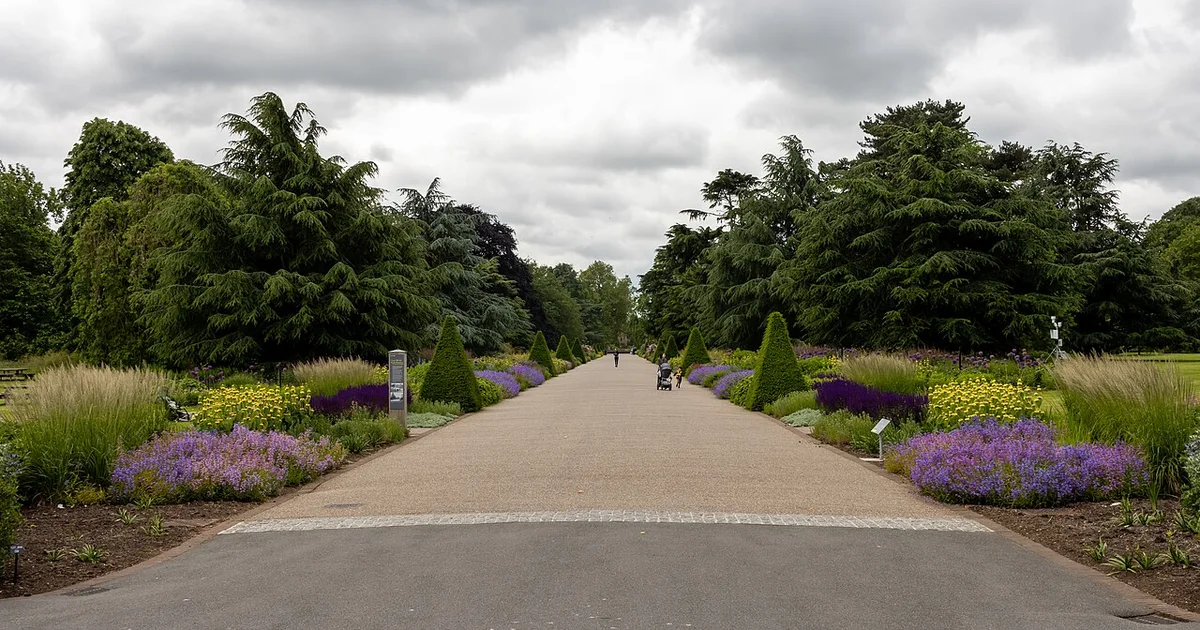
Context for Royal Botanic Gardens, Kew. Related archive image: At Royal Botanic Gardens, Kew 2024 366.jpg. Not a photograph of this news event. Cropped to fit. Credit: Photograph by Mike Peel ( www.mikepeel.net ).. Image source · Image licence
Context
The expedition led to the location of two initial plants without flowers, which are required for species identification. On the final night of the expedition, Melo guided the team to a small rainforest lake where they found a second population, including a flowering plant.
Magdalena noted that the partnership with Rodríguez, Hernández, and Melo was essential due to their navigation skills and local knowledge in an area lacking GPS and mobile connectivity. The researchers estimate there are only about 30 to 50 wild V. colombiana plants, classifying the species as critically endangered. The team is currently attempting to collect seeds to propagate in botanic gardens and near Indigenous communities.
What's Next
The research team is working to collect seeds from Victoria colombiana to propagate them in botanic gardens and near the local Indigenous communities.
THE BIGGER PICTURE
Why it matters
The discovery of Victoria colombiana highlights how digital platforms like social media can occasionally contribute to botanical finds, while also underscoring the vulnerability of rare, isolated ecosystems containing critically endangered plant species.
What we know
Carlos Magdalena identified potential new giant water lilies via Instagram photos posted by Jeremiah Harris.
Satellite imagery confirmed floating pads in the Inírida River and nearby lakes.
A research team including local Indigenous members conducted a five-day expedition to locate flowering specimens.
The new species has been named Victoria colombiana, with leaves up to 2 metres wide.
Researchers estimate there are roughly 30 to 50 wild plants, rendering the species critically endangered.
What remains unclear
The exact total wild population size remains an estimate of 30 to 50 plants.
How the story developed
Victoria colombiana confirmed as new giant water lily species
Researchers published findings confirming Victoria colombiana as a new, critically endangered giant water lily species in Colombia.
The aurora borealis, typically confined to the Arctic Circle and northern Scotland, was observed across the UK on Friday and Saturday evening. Sightings were reported as far south as Devon, Hampshire, and Kent. The Met Office indicates that the phenomenon, caused by solar activity interacting with Earth's magnetic field, may remain visible across Scotland and similar geomagnetic longitudes through Tuesday, provided skies remain clear.
A recent study from Macquarie University indicates that brolga populations in Victoria are experiencing a decline in genetic variation, making them increasingly distinct from their stable counterparts in northern Australia. Researchers attribute this genetic rift and the species' endangered status in the state to the loss and degradation of wetland habitats, driven by historical land drainage for farming and ongoing climate change. While the population in Victoria is estimated to be as low as 1,000, conservationists report that targeted wetland restoration projects are successfully attracting the birds back to traditional habitats.
The Nature Data Lab has introduced Global Safety Net v3 (GSN3), a geospatial platform utilizing satellite imagery and artificial intelligence to monitor the status of natural lands globally. Developed to assist in tracking progress toward the U.N. Convention on Biological Diversity's '30x30' goal—protecting 30% of global lands and oceans by 2030—the tool provides a neutral, third-party assessment of conservation effectiveness. GSN3 operates at a 90-meter resolution, offering significantly higher detail than previous iterations, and incorporates data on Indigenous-managed territories, which the initiative identifies as highly effective for conservation.
· 1 source 3 min read 0 views
New Giant Water Lily Species Discovered in Colombia