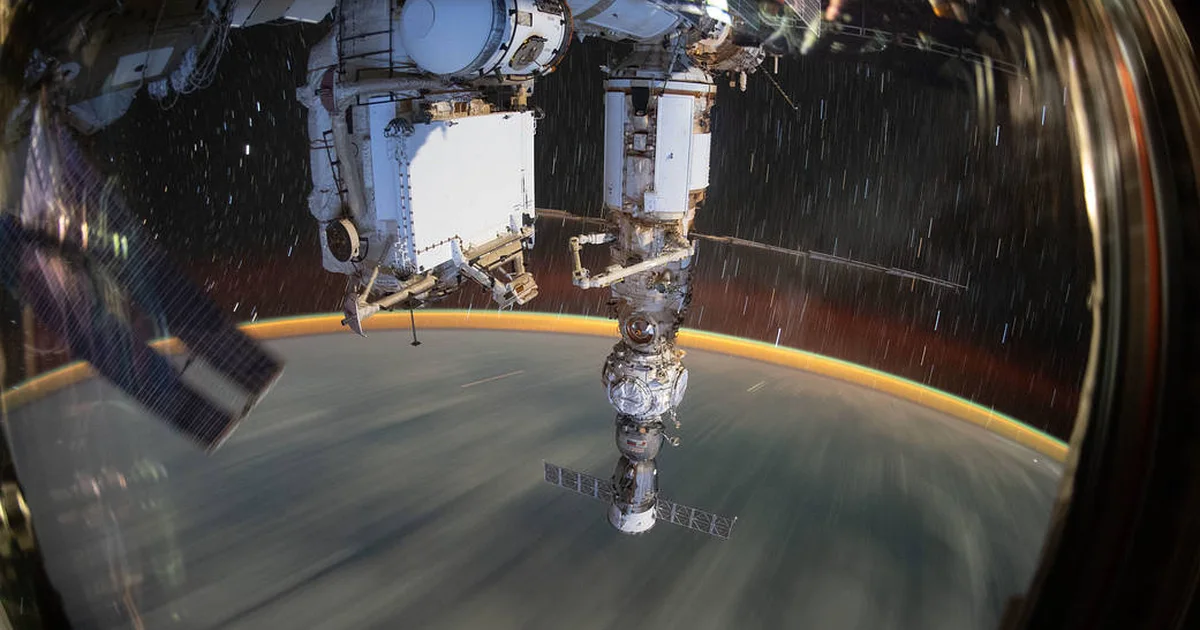
NASA Deploys Experimental Heat Shield Capsules During Cargo Spacecraft Re-entry
NASA has initiated the Kentucky Reentry Probe Experiment (KREPE-3), a project designed to test next-generation thermal protection materials for future space exploration. By utilizing 12 small, experimental capsules packed into a Northrop Grumman cargo spacecraft as it undocked from the International Space Station, researchers are gathering data on how various materials perform during atmospheric re-entry. The capsules, which include sensors to measure environmental conditions like temperature and pressure, are designed to eject as the spacecraft breaks apart, transmitting live data to researchers. This initiative, a collaboration involving the University of Kentucky and other partners, aims to develop more efficient and cost-effective heat shield technologies for missions to the Moon, Mars, and beyond.
Key points
- NASA launched the KREPE-3 experiment to test new thermal protection materials for future space missions.
- 12 experimental capsules were deployed from a Northrop Grumman cargo spacecraft during its atmospheric re-entry.
- The capsules are equipped with sensors to measure temperature, pressure, motion, magnetic field, and light.
- Materials being tested include 3D-printed heat shields and flexible carbon-phenolic fibers known as MERINO.
- The project is a collaboration between NASA, the University of Kentucky, and various international and commercial partners.
What Happened
NASA is conducting a series of tests on advanced heat shield technologies by deploying 12 experimental capsules from a Northrop Grumman cargo spacecraft. The mission, known as the Kentucky Reentry Probe Experiment (KREPE-3), utilizes the final stages of the cargo vehicle's lifespan to gather data as it re-enters Earth's atmosphere.
The capsules were packed into the spacecraft by astronauts before it departed the International Space Station. Upon the vehicle's planned disintegration, the capsules are designed to eject and collect data on how different thermal protection materials withstand the intense conditions of re-entry.
Context
The KREPE-3 experiment is part of NASA's Established Program to Stimulate Competitive Research (EPSCoR). It serves as a platform for students and researchers to test materials that could support future missions to the Moon and Mars.
The materials being tested range from proven ceramic tiles used on the space shuttle to innovative solutions like 3D-printed heat shields and MERINO (Materials Engineered for Re-entry using Innovative Needling Operations). MERINO materials are noted for being more flexible and cost-effective than traditional options, making them potential candidates for Mars missions where lighter protection is required due to the planet's thinner atmosphere.
What's Next
Data collected by the capsules will be transmitted via satellite to researchers, providing insights into the performance of these materials. The findings are expected to inform the design of larger heat shields for future cargo and crewed missions, including the upcoming Dragonfly mission to Titan.
Why it matters
Developing more efficient and affordable heat shield technology is critical for the success of future deep-space exploration, including missions to Mars and the moons of Saturn, where spacecraft must survive extreme thermal loads during entry.
What we know
- NASA is testing next-generation heat shield materials using 12 experimental capsules deployed from a Northrop Grumman cargo spacecraft during its re-entry.